


Introduction:
“They Cloned Tyrone,” a Netflix sci-fi comedy film, takes audiences on a thrilling journey of conspiracy and cloning experiments hidden beneath a rundown neighborhood. Starring John Boyega as Fontaine, Jamie Foxx as Slick Charles, and Teyonah Parris as Yo-Yo, the movie explores the discovery of clones of familiar faces from the neighborhood and the shocking truth behind the cloning experiment. In this breakdown, we’ll delve into the intricate and mind-bending ending of the film, revealing the sinister motivations of the cloning project and the dramatic climax that follows.
Plot Summary:
The film begins with Fontaine, a hustler, getting caught in a shootout and seemingly dying. However, he miraculously shows up unharmed the next day. With the help of Slick Charles and Yo-Yo, they stumble upon an abandoned house revealing a secret laboratory where they find clones of Fontaine and others from their neighborhood.
As they uncover more hidden locations leading back to the lab, they discover the real mastermind behind the cloning experiment, Nixon. He reveals that the cloning project is part of a bigger scheme to maintain run-down neighborhoods without interference from gentrification, using clones of hustlers and pimps as a “control setting” to achieve this.
They Cloned Tyrone” takes audiences on a gripping journey through a freaky conspiracy involving cloning experiments hidden beneath a rundown neighborhood called The Glen. Starring John Boyega as Fontaine, Jamie Foxx as Slick Charles, and Teyonah Parris as Yo-Yo, the sci-fi comedy film uncovers a sinister plot orchestrated by a mysterious figure named Nixon. The cloning project is part of a larger scheme to maintain the neighborhood’s status quo without interference from gentrification. Hustlers and pimps like Fontaine and Slick Charles are cloned as “control settings” to perpetuate the current conditions.
A significant twist occurs halfway through the film when Nixon reveals a shocking truth to Fontaine—he himself is a clone. Attempting to confront Nixon in anger, Fontaine is stopped by a code word that only affects clones, leading him to discover his true identity.
Feeling powerless after this revelation, Fontaine initially contemplates accepting his fate, but Slick Charles and Yo-Yo have other plans. Yo-Yo gets kidnapped and taken back to the cloning lab, prompting Fontaine and Slick Charles to team up to put an end to the cloning operation once and for all.
The film reaches its climax when Slick Charles devises a daring plan to sneak Fontaine back into the lab by faking his death. With Fontaine inside, he aims to rescue Yo-Yo and the other clones while Slick Charles leads a revolt in the neighborhood to take down Nixon and destroy the lab.
During a harrowing confrontation with one of his dangerous clones, Fontaine is beaten and brought face to face with the real mastermind behind the cloning experiment—the original Fontaine, who is much older. The original Fontaine explains that the experiment stemmed from the tragedy of his little brother Ronnie’s death, motivating him to seek a way to prevent similar losses.
In a shocking revelation, the mad scientist discloses that the “invisible powers that be” had previously conducted harmful experiments on Black communities, using clones to maintain the illusion. The ultimate goal is to assimilate all Black clones into other races to preserve a deceptive peace.
The aftermath sees Fontaine, Slick Charles, Yo-Yo, and the other clones returning to The Glen, where the shocking discovery becomes national news. However, the end-credits scene hints at the possibility of more clones scattered across the country, suggesting potential future developments and leaving audiences with lingering questions about the film’s captivating universe.
As a movie series, “They Cloned Tyrone” skillfully weaves a complex narrative filled with thrilling action, emotional revelations, and thought-provoking implications of cloning technology. While the story is fictional, it draws inspiration from real-life cloning breakthroughs, most notably Dolly the Sheep—the world’s first cloned mammal, created in 1996.
Additionally, the film’s themes of ethical dilemmas surrounding cloning echo the 1992 movie “The Cloning of Joanna May,” which explored similar moral quandaries in a dramatic setting.
As audiences are left craving more from this thought-provoking series, the film’s ambiguous ending paves the way for potential sequels, delving further into the repercussions of cloning technology in a fast-paced and gripping manner.
The film’s final showdown is intense as Fontaine uses the magic command “Olympia Black” to activate his dangerous clone, instructing him to kill the original Fontaine. Meanwhile, Slick Charles takes down Nixon, liberating the clones and securing their freedom.
Does “Olympia Black mean Black Olympian?
Ancient Olympia, the birthplace of the Olympic Games, was a sacred site located in the western part of the Peloponnese peninsula in Greece. The ancient Olympics were held between the 8th century BCE and the 4th century CE, and they were open to free-born Greek men from different city-states and regions. It is essential to note that the ancient Greeks did not categorize people based on race in the way that modern societies do. Instead, they identified themselves primarily based on their city-state, ancestry, and cultural affiliations. The Olympics have a rich history dating back to ancient Greece and have been held regularly in modern times since 1896.
“Olympia Black vs Black Olympian?
Ancient Olympia, the birthplace of the Olympic Games, was a sacred site located in the western part of the Peloponnese peninsula in Greece. The ancient Olympics were held between the 8th century BCE and the 4th century CE, and they were open to free-born Greek men from different city-states and regions. It is essential to note that the ancient Greeks did not categorize people based on race in the way that modern societies do. Instead, they identified themselves primarily based on their city-state, ancestry, and cultural affiliations. The Olympics have a rich history dating back to ancient Greece and have been held regularly in modern times since 1896.
The information about ancient Greece and the Olympic Games is not directly related to the movie “They Cloned Tyrone” and the concept of assimilation discussed earlier. However, we can draw a connection between the historical context of ancient Greece and the themes of assimilation in the film.
In the movie “They Cloned Tyrone,” the concept of assimilation is explored through the cloning experiment’s sinister motives. The mad scientist behind the cloning operation aims to assimilate Black communities by creating clones of hustlers and pimps like Fontaine and Slick Charles. The goal is to maintain run-down neighborhoods without interference from gentrification by using these clones as a “control setting.”
Assimilation, in this context, refers to the forced integration or transformation of a group of people into the dominant culture or society. The scientist’s plan involves turning all Black clones into other races, erasing their unique genetic identities, and making them indistinguishable from other communities. The objective is to maintain the status quo and preserve the facade of harmony while eradicating the distinct characteristics of the marginalized community.
Drawing a connection to ancient Greece, the concept of assimilation was not directly present in the same way during that time. However, the ancient Olympic Games did serve as a unifying event for the diverse city-states of Greece. During the Games, the city-states put aside their differences and conflicts to participate in peaceful athletic competition. This can be seen as a form of assimilation in the sense of promoting unity and shared identity as Greeks.
In the film, the theme of assimilation is explored in a darker and more manipulative context, highlighting the unethical use of cloning technology to maintain control and suppress the uniqueness of a particular community. The movie uses this fictional concept to comment on issues of identity, power, and the potential consequences of unchecked scientific experimentation.
Overall, while there is no direct historical connection between ancient Greece and the film’s plot, the concept of assimilation is a central theme in “They Cloned Tyrone,” portraying the consequences and moral dilemmas surrounding attempts to assimilate and control a specific group of people.
While there is no direct connection between the ancient Olympic Games and the movie “They Cloned Tyrone,” we can explore how both the ancient Olympics and the film touch on themes of identity, freedom, and societal expectations.
Identity and Freedom: In the ancient Olympics, free-born Greek men from various city-states participated in athletic competitions, showcasing their physical abilities and prowess. The Games provided an opportunity for these athletes to express their identities as proud citizens of their respective city-states. Similarly, in the movie “They Cloned Tyrone,” the main character Fontaine grapples with his identity and realization that he is a clone. His journey revolves around reclaiming his freedom and breaking free from the control of those behind the cloning experiment.
Societal Expectations: In ancient Greece, participating in the Olympic Games carried significant social and cultural importance. Athletes were seen as representatives of their city-states, and their victories brought honor and prestige to their communities. Similarly, in the film, the cloning experiment is driven by the desire to maintain societal expectations and control. The clones are created to perpetuate a certain image and role in their neighborhoods, reflecting the manipulation of individuals to fit specific societal norms. In summary, the connection between the ancient Olympics and the movie “They Cloned Tyrone” lies in their exploration of identity, freedom, and societal expectations. While the ancient Olympics showcased the expression of Greek identity through athletic competition, the film delves into the struggle for individuality and freedom in the face of manipulative experiments.
In the movie “They Cloned Tyrone,” the themes of assimilation and cloning can be related to the ancient Roman festival of Saturnalia, which involved the temporary relaxation of social norms and the concept of temporary equality.
Assimilation: In “They Cloned Tyrone,” the concept of assimilation is explored through the sinister motives of the cloning experiment. The mad scientist aims to assimilate Black communities by creating clones of hustlers and pimps like Fontaine and Slick Charles. The goal is to maintain run-down neighborhoods without interference from gentrification by using these clones as a “control setting.” Similarly, during Saturnalia, social norms were temporarily relaxed, allowing for a sense of assimilation and temporary equality among different social classes. Slaves, who were usually considered subservient to their masters, were given freedoms during the festival, blurring the lines of social distinction.
Cloning and Equality: In “They Cloned Tyrone,” the clones are created to perpetuate a certain image and role in their neighborhoods, reflecting the manipulation of individuals to fit specific societal norms. The clones are meant to be identical to their original counterparts, representing a lack of individuality and autonomy. During Saturnalia, the concept of equality was temporary, and the freedoms given to slaves were not permanent. The festival showcased how social norms and distinctions could be suspended temporarily but would return to their usual state after the event. Similarly, the clones in the movie are meant to fulfill a specific role and assimilate into the neighborhood’s existing dynamics, removing their individuality and unique identities.
Overall, the connection between the movie and the ancient Roman festival of Saturnalia lies in the exploration of temporary equality and the suspension of social norms. However, it is essential to note that the cloning experiment in the film “They Cloned Tyrone” takes on a much darker and unethical dimension compared to the festive and celebratory spirit of Saturnalia. The movie uses this fictional concept to comment on issues of identity, power, and the potential consequences of unchecked scientific experimentation.
“Olympia Black: Unraveling Cloning’s Dark Secrets in ‘They Cloned Tyrone’”
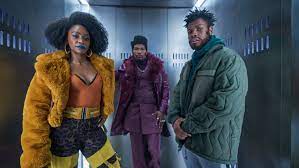
“They Cloned Tyrone” weaves a complex narrative that explores the dark side of cloning and the consequences of assimilation. The movie’s ending brings together the themes of identity, power, and control, leaving viewers with lingering questions and a desire for further exploration of this captivating sci-fi universe.
Thank you for reading.

 Bosses Made Men
Help us improve our community…………….. Tell us how we’re doing?