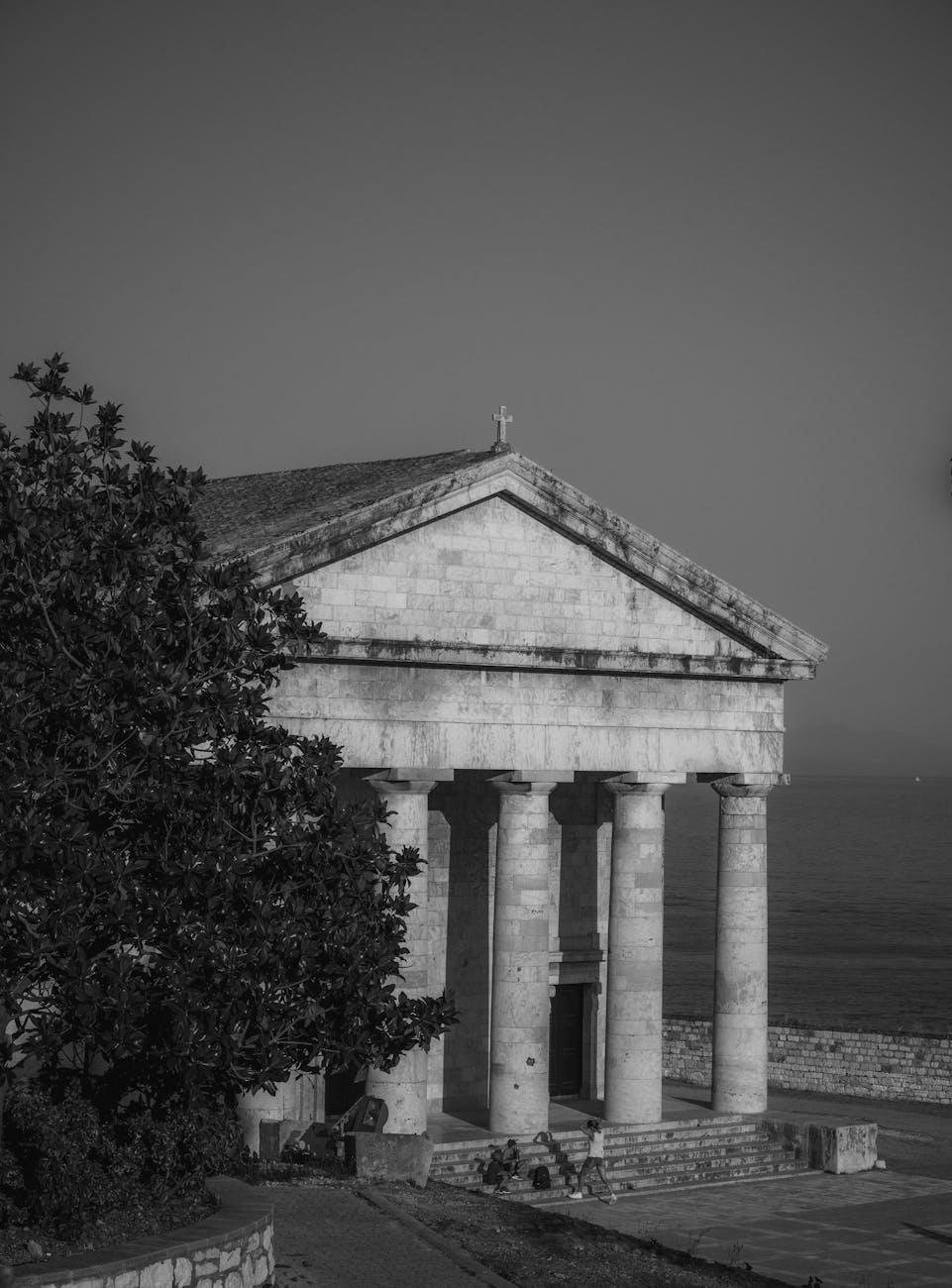


A Monument to Victory — Built to Last
Rising from the green edge of Burgess Park stands a towering relic of Georgian ambition: St George’s Church, Wells Way. Completed in 1824, it wasn’t just a house of worship — it was a statement of national pride, one of many “Waterloo Churches” built to mark Wellington’s victory over Napoleon.

Designed by Francis Bedford, its Greek Revival facade was meant to impress, inspire, and dominate the mostly open countryside of 19th-century Camberwell. Built at a cost of £20,000, it could seat 1,734 people — an answer to the swelling urban population that had outgrown the nearby St Giles.
🌾 From Open Fields to a Community Hub
When St George’s opened, the surrounding land was mostly fields and market gardens. The nearby canal and Wells Way swing bridge were recent additions. But the church wasn’t built for peace and quiet — it was built for growth. And grow the area did. Over the decades, streets filled in, families moved in, and the church thrived.
It even became a spiritual outpost of Trinity College, Cambridge, serving as a mission for London’s expanding inner-city population by the late 1800s. So integral was it to local life that by 1856, the graveyard was full — converted into a small public garden by 1887.
🕳️ Decline, Desecration, and Darkness
But by the mid-20th century, Camberwell began to change. Housing cleared for Burgess Park meant fewer parishioners. In 1970, services ceased. By 1977, even the Celestial Church of Christ, who purchased it, couldn’t afford upkeep.
Then came the desecration.
Vandals broke into the crypt, smashed coffins, graffitied walls, and mutilated corpses. A stake was allegedly driven into a corpse’s chest. A 100-year-old skull was kicked like a football. Whispers of smallpox threats and disease hung in the air. It was no longer sacred ground — it was a forgotten ruin.
Then in 1980, fire struck. The church was left roofless, vandalised, and nearly lost for good.
🔁 Rebirth: Housing from the Ashes
Just when demolition seemed inevitable, a different vision emerged. In 1993, developers stepped in with a bold idea: adaptive reuse. After 18 months and £2 million, the empty shell was reborn as 30 Mediterranean-style flats, managed by St George’s Housing Co-op. Even the remains in the crypt were respectfully reburied at Nunhead Cemetery, October 1993.
Today, residents live inside a listed building, surrounded by legacy, stone columns, and silent stories.
🕊️ The Bronze Christ & A Ghost of War
Standing before the entrance is a bronze war memorial — Christ, bowed in grief. Sculpted in 1919 by Danish artist Arild Rosenkrantz, it was stolen in 1991, only to resurface — undamaged — in a Brixton scrapyard after a public plea. English Heritage listed the statue in 2017.
🧩 The Faded Sign & The Forgotten Warning
On the building’s side, barely visible now, is a 19th-century painted sign. Likely a reward notice, its faded lettering may have once warned vandals. A literal ghost of authority, cracked and weathered by time.
Catch a glimpse yourself — it’s still there, just off Jubilee Plaza.
🪦 Postscript: The Dead Remembered
In 2021, a photo surfaced from Australia: a grave marker in Nunhead Cemetery commemorating those reburied from St George’s crypt. Alongside it came a list of ~120 names — mostly 19th-century Camberwell residents, their identities preserved by the Necropolis Company during the church’s conversion.
If you have family roots in the area, you might just find your bloodline tied to this sacred ground.
🧠 Final Word
St George’s is a story of triumph, tragedy, and transformation. From a field in Camberwell to a battlefield relic. From holy ground to broken crypt. From scorched ruin to a new kind of sanctuary.
It’s more than just a building — it’s a mirror of London itself: built by power, tested by time, reclaimed by vision.
🗣️ “Legacy isn’t what you leave behind. It’s what refuses to be erased.”🕍 Decline and Transformation
- Mid-20th Century Changes: As the local population declined and urban development altered the landscape, the church’s congregation dwindled. The building was deconsecrated in 1976 and subsequently fell into disrepair. heritage.southwark.gov.uk+4Historic England+4bridgetonowhere.friendsofburgesspark.org.uk+4
- Restoration and Adaptive Reuse: In the early 1990s, efforts were made to preserve the structure. Between 1992 and 1994, the church was converted into residential housing by a cooperative housing group, ensuring the building’s survival and continued relevance. Historic England
🏛️ Heritage Status
- Grade II Listing: Recognized for its architectural and historical significance, the former St George’s Church was designated as a Grade II listed building on 30 June 1954. This status helps protect its architectural integrity and ensures any alterations respect its historical character. Historic England
📍 Location and Surroundings
- Setting: Situated on Wells Way, the building is adjacent to Burgess Park, one of Southwark’s largest parks. The area has undergone significant transformation, with the park’s development influencing the church’s context within the urban landscape. bridgetonowhere.friendsofburgesspark.org.uk
Today, the former St George’s Church stands as a testament to Camberwell’s rich history, blending classical architecture with contemporary urban living. If you’re interested in exploring more about Camberwell’s historical site
BOSSES DAILY
About BossesMadeMen
BossesMadeMen isn’t just a brand—it’s a blueprint.
We’re here for the self-starters, the ones who never settle, the ones rewriting their family history one smart move at a time. Whether you’re an entrepreneur, a leader in your field, or building from the ground up, this is your space.
Topics we cover:
- Entrepreneurship & Startups
- Mindset & Mental Toughness
- Wealth Creation & Ownership
- Street Smarts Meets Business Strategy
- Culture, Style, and Legacy
Exploring the Hidden History of St George’s Church, Wells Way
📍 Address: 55 Wells Way, Camberwell, London SE5 7TW
Built: 1822–1824 | Architect: Francis Octavius Bedford | Style: Greek Revival
Listed: Grade II Historic Building
🔍 A Tower of Time in Camberwell
Tucked quietly beside the open sprawl of Burgess Park lies an architectural relic with a soul: the former St George’s Church at 55 Wells Way. Once a centerpiece of 19th-century community life, today it stands not just as a preserved monument, but as a reimagined space — breathing new life in a rapidly evolving part of South London.
⛪ Built for a Growing Nation
Commissioned in the post-Napoleonic War period, St George’s Church was one of many “Waterloo churches” — funded by Parliament to serve booming urban populations and commemorate victory. Its Greek Revival style, with grand pillars and classical symmetry, made it stand out even in a city famous for historic architecture.
But this wasn’t just a place of worship. It was a social hub, a statement of civic pride, and a spiritual anchor for generations of working-class families.
📉 Decline, Deconsecration & Urban Shift
As time passed, Camberwell changed. The bombings of World War II, shifting demographics, and modern planning cut new roads through old neighborhoods. In 1976, after years of declining attendance, St George’s was deconsecrated.
For a time, the structure stood in quiet disrepair — a ghost of grandeur.
Rebirth: From Church to Community Housing
The turning point came in the 1990s, when housing cooperatives stepped in. Recognizing the building’s value, developers converted the space into residential units, carefully preserving the exterior’s historic details. This transformation saved the church — and gave it a second purpose, one rooted in community yet again.
Today, those who live there wake up within history. High ceilings, original features, and arched windows remain, blended with modern interiors.
Why 55 Still Matters
In a city constantly rewriting itself, 55 Wells Way is a reminder that the past doesn’t have to be bulldozed — it can be reimagined. It’s not just a building; it’s a story:
- Of London’s expansion
- Of spiritual and social evolution
- Of urban renewal done right
Whether you’re walking through Burgess Park, studying architectural history, or simply fascinated by London’s layers, 55 is worth your attention.
💼 Boss vs. Made Man: Temporary Power vs. Lasting Legacy
“Being a boss is about control. Being made is about influence.”
At first glance, it sounds like a clever one-liner. But dig deeper, and you’ll find a blueprint for understanding two very different types of leadership.
Let’s break it down — because here at BossesMadeMen, we don’t just chase success. We engineer legacy.
The Boss: Authority by Position
A boss gets handed (or grabs) power. That power might come from a title, money, muscle, or temporary success. The boss calls shots and demands results. But here’s the truth:
👉 Control is limited. People follow because they have to. When the paycheck stops, the loyalty ends.
Boss energy:
- Talks first, listens last
- Leads by fear or hierarchy
- Needs to be seen as “in charge”
- Lives in the now
The boss is the king of the moment. But moments fade.
🔗 The Made Man: Authority by Respect
A made man doesn’t need to prove power — it moves with him.
Why? Because his influence is earned, not granted. His name opens doors. His reputation outlasts trends. A made man builds others up while building himself. He’s not just respected — he’s remembered.
Made man energy:
- Moves in silence, speaks with weight
- Leads by example
- Creates loyalty, not dependence
- Thinks in decades
A made man plays the long game — he’s not building an empire for the ‘Gram, he’s laying bricks for his bloodline.
🧠 Why Influence Beats Control
Power can be taken. Influence can’t.
A made man understands that the real flex is trust. He earns seats at tables without needing to flip them. His network is deeper than his net worth. While a boss might force his way into the room, a made man gets invited back.
🏗️ What Are You Building?
Ask yourself:
- Do people listen to you or just obey you?
- Do you build people up or keep them down to stay on top?
- When you’re gone — will your name mean something?
At BossesMadeMen, we believe you’re not truly successful until your influence lives beyond your presence. Anyone can be a boss. Only a few become made.
📌 Final Word
You don’t have to be born with legacy — you build it.
Start today. Lead with values. Move with vision. And remember:
💬 “A boss may run the room — but a made man owns the respect in it.”
Keep Building:
- [5 Habits of Made Men That Bosses Ignore]
- [Legacy Over Likes: Why Quiet Power Wins]
“Discipline beats talent when talent doesn’t show up.”
Let that sink in. Because in the real world — where deals are made, dreams are tested, and legacies are built — talent gets you noticed, but discipline gets you paid.
1️⃣ Show Up Ruthlessly
It sounds simple, but it’s everything.
While others rely on motivation, the self-made leader builds routines. He shows up — even when it’s boring, uncomfortable, or hard. Especially then.
Discipline tip:
You don’t rise to the level of your goals. You fall to the level of your systems.
2️⃣ Protect Your Energy
Time is money, but energy is legacy.
Discipline means saying no — to distractions, to people who drain you, and to anything that doesn’t serve your mission.
Power move:
3️⃣ Execute > Overthink
Talented people get caught in analysis. Disciplined people just start.
Self-made leaders know: perfect is the enemy of progress. Ship it. Test it. Learn. Grow.
Boss habit:
Make decisions fast. Adjust as you move. Momentum is a cheat code.
4️⃣ Stay Learning, Stay Humble
Discipline isn’t loud. It’s hungry.
Made men are obsessed with getting better — even when no one’s watching. Especially then.
Level-up rule:
1 hour a day for reading, reflecting, or refining your craft = compounding greatness.
5️⃣ Fall In Love With Boring
Success isn’t sexy — it’s consistent.
Real power is found in the quiet repetition of small wins. Wake up. Lock in. Get it done.
Talent is potential.
Discipline is power.
That’s why BossesMadeMen don’t wait to feel inspired — they build systems that make winning inevitable.
🗣️ “If you don’t sacrifice for what you want, what you want becomes the sacrifice.”


 Bosses Made Men
Help us improve our community…………….. Tell us how we’re doing?