


There are moments in history when Scripture stops feeling ancient and starts feeling uncomfortably current.
Lamentations 5 is one of those moments.
Written as a communal cry after national collapse, Lamentations 5 is not polished poetry or theological debate. It is raw, breathless, unresolved. A people looking at broken systems, exhausted leadership, and daily indignities—and asking one aching question:
“Lord, remember what has happened to us; look, and see our disgrace.” (Lamentations 5:1, NIV)
That verse alone could headline today’s political commentary.
A Nation Speaking From the Margins
Lamentations 5 reads like a society where power has drifted upward and accountability has slipped away. The chapter lists loss after loss—homes, dignity, safety, voice. It speaks of leaders who fail, systems that no longer protect, and ordinary people paying the price.
Sound familiar?
In the UK right now, many disabled people and their families are not asking for privilege. They are asking for fairness, dignity, and basic protection under the law. Concerns continue to surface around access to care, assessment processes, living standards, institutional treatment, and whether existing safeguards truly uphold human rights for the most vulnerable.
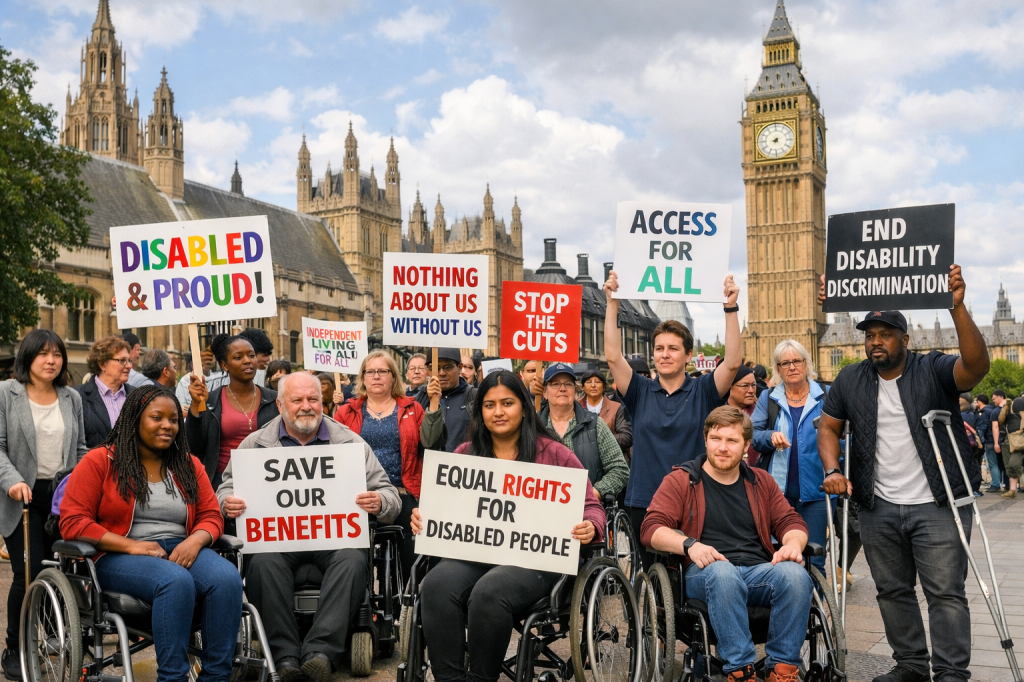
This is not abstract policy. This is daily life.
And that is exactly where biblical lament lives.
Lament Is Not Weakness — It Is Moral Clarity
One of the most radical things about Lamentations 5 is that it refuses to spiritualise suffering away. The people do not pretend everything is fine. They do not rush to silver linings. They speak plainly about injustice.
Lament, biblically, is truth-telling before God.
In modern politics, disabled voices are too often filtered, delayed, or sidelined. Reports may be commissioned. Reviews may be promised. But lived experience still struggles to be centred. Lamentations reminds us that silence is not neutrality—it is erasure.
“Our inheritance has been turned over to strangers, our homes to foreigners.” (Lamentations 5:2, NIV)
Today, this can feel like decisions about disabled lives are being made about them, not with them. When policy becomes procedural and compassion becomes conditional, lament is the language of those left unheard.
Human Rights Are Not Optional Extras
Lamentations 5 repeatedly links suffering to leadership failure. It does not name individuals, but it does assign responsibility. When protection collapses, the consequences are human.
For disabled people, human rights are not theoretical ideals. They are the difference between:
- Safety and neglect
- Support and isolation
- Voice and invisibility
When systems designed to protect instead exhaust, disbelieve, or dehumanise, lament becomes both prayer and protest.
And Scripture gives space for that.
The Uncomfortable Ending That We Need
Lamentations 5 ends without resolution.
No policy reform.
No restoration speech.
No neat conclusion.
Just a question hanging in the air:
“Restore us to yourself, Lord… unless you have utterly rejected us.” (Lamentations 5:21–22, NIV)
That tension matters.
It tells us that faith does not require pretending injustice has been fixed. It allows us to sit in the discomfort, to keep asking hard questions, and to keep pressing leaders—political and institutional—to remember who they serve.
A Call to Leaders—and to Us
Lamentations 5 challenges modern politics with a simple but piercing standard:
How does power treat the vulnerable?

For lawmakers, policymakers, and institutions, this chapter is a mirror.
For the public, it is permission to speak.
For the Church, it is a reminder that justice is not optional, and silence is not holy.
Lament is not the opposite of hope.
Lament is what hope sounds like when people refuse to accept injustice as normal.
And right now, in the corridors of power and the quiet lives affected by their decisions, that lament is still rising.


 Bosses Made Men
Help us improve our community…………….. Tell us how we’re doing?