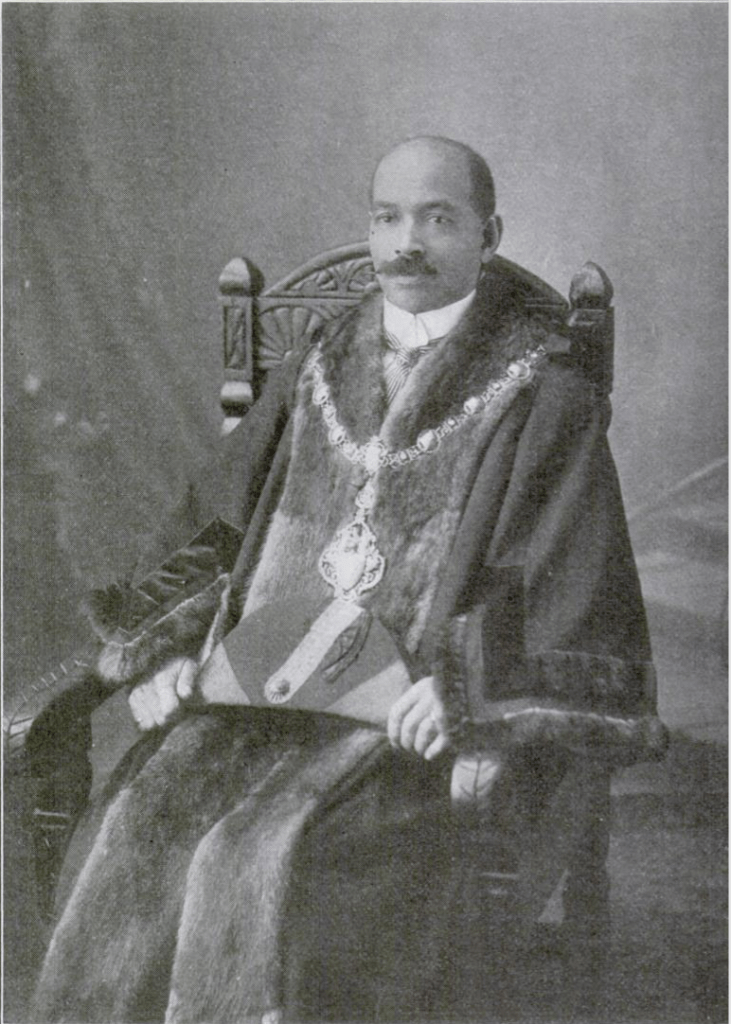
In 1913, John Richard Archer etched a significant milestone in British history when he became the first Black man elected as mayor of a London borough, serving Battersea and symbolising a shift in politics and race relations in the capital. Let’s delve into the life, struggles, and legacy of this extraordinary figure.
Early Life & Career
Born on 8 June 1863 in Liverpool to a Barbadian ship steward father and an Irish mother, Archer’s early years were marked by diverse experiences—he sailed the world as a seaman, dabbled in medicine, ran a photographic studio, and even performed professionally as a singer by 1901 AAF+9Wikipedia+9BajanThings+9Kat DevittBlackPast.org+7University of Liverpool+7English Heritage+7.
Political Awakening & Pan-African Engagement
Archer’s political journey began after attending the first Pan‑African Conference in London in 1900. Inspired, he aligned with progressive politics in Battersea, an area known for radical thought and activism blackheroesfoundation.org+4Kat Devitt+4BajanThings+4. He was elected to Battersea Borough Council in 1906, where he successfully pushed for a minimum wage of 32 shillings a week for council workers—a radical social reform at the time blackheroesfoundation.org+10Wikipedia+10BLACK LIVES MATTER MOVEMENT+10.
Mayoral Triumph Amidst Prejudice
Despite winning a council seat, he lost it in 1909—only to reclaim it in 1912. In November 1913, amid significant racist backlash and press questioning his nationality, he was nominated and elected mayor by a narrow vote of 40 to 39 BajanThings+5Wikipedia+5BlackPast.org+5.
In his powerful acceptance speech, Archer declared:
“My election tonight means a new era. You have made history tonight. For the first time in the history of the English nation a man of colour has been elected as mayor of an English borough…”
“That will go forth to the coloured nations of the world…and say…but the greatest thing…has been to show that…it recognises a man for the work he has done.” Face2Face Africa+5Kat Devitt+5BajanThings+5BlackPast.org+5Wikipedia+5BLACK LIVES MATTER MOVEMENT+5
His achievement even made headlines in the U.S.—particularly in The Crisis, published by the NAACP—in early 1914 BajanThings+3Wikipedia+3BLACK LIVES MATTER MOVEMENT+3.
Continued Advocacy & Pan-African Leadership
Post-mayoralty, Archer stayed politically active:
- 1918: Became founding president of the African Progress Union.
- 1919–1921: Served as a delegate and later chaired the Pan‑African Congresses in Paris and London.
- He also played a key role in supporting Shapurji Saklatvala, an Indian-born Communist candidate, as a Labour Party election agent—contributing to one of Britain’s earliest non-white MPs Voice4Change-England+6BlackPast.org+6English Heritage+6BajanThings+6Wikipedia+6Kat Devitt+6.
Legacy & Commemoration
Archer continued serving Battersea—including roles on educational boards and as deputy leader of the Council—until his death in July 1932 BLACK LIVES MATTER MOVEMENT+3Wikipedia+3BajanThings+3.
His enduring legacy includes:
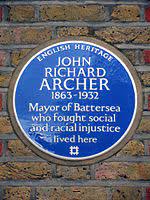
- English Heritage blue plaque at his former home (55 Brynmaer Road, Battersea) recognizing his fight against racial and social injustice Kat Devitt+8English Heritage+8IBHM-UK+8.
- Honoured in the Royal Mail’s “Great Britons” stamp series in 2013 IBHM-UK+2BLACK LIVES MATTER MOVEMENT+2.
- Institutions named after him: John Archer Way, Ark John Archer Academy, and John Archer Hall in Liverpool South London News+9IBHM-UK+9Wikipedia+9.
- Ranked in the “100 Great Black Britons” poll in 2004 Face2Face Africa+4IBHM-UK+4Wikipedia+4.
Conclusion
John Richard Archer’s story is one of perseverance, leadership, and justice. As a trailblazer in local government and Pan-African advocacy, he reshaped the narrative for Black political participation in Britain. His legacy still resonates today—reminding us of the power of breaking barriers and championing equality.

 Bosses Made Men
You must be logged in to post a comment.